Last updated October 16, 2026
We have built fire pits, fireplaces and gas fire features across the Phoenix metro since 2012, and cost is almost always the first question homeowners ask. There is no single sticker price in the desert: the number moves with fuel type, whether we run a gas line through caliche, the facing material, and how much seating you build around it. Here is what we generally see, and what actually drives the figure up or down.
How much does a fire pit cost in Phoenix?
Most built-in fire pits we install in the Phoenix metro land between 3,000 and 8,000 dollars, and custom outdoor fireplaces start around 8,000 dollars and climb from there. Fuel sets the floor: a wood-burning pit is the least expensive because there is no gas plumbing, while a gas pit costs more once we run a line and set a stainless burner. The table below shows the ranges we generally see. Treat them as planning numbers, not a quote, because the real figure depends on size, facing material, how much caliche we dig through for footings and the gas run, and the seating you want around it, all of which we confirm on site.
| Fire feature type | Typical installed cost | Notes for Phoenix yards |
|---|---|---|
| Wood-burning fire pit | about 3,000 to 5,000 dollars | Lowest cost, no gas line; limited on county no-burn days |
| Gas fire pit, prefab insert | about 3,000 to 6,000 dollars | Factory bowl and burner set into a built surround |
| Gas fire pit, custom built-in | about 5,000 to 8,000 dollars | Masonry core faced to match your pavers |
| Custom outdoor fireplace | about 8,000 dollars and up | Back wall and hearth block wind, direct heat |
Gas or wood-burning: which costs more to build and run?
A wood-burning fire pit is cheaper to build because it is essentially a masonry ring with no utilities, and the fuel is whatever firewood you buy. The catch in the Valley is use: Maricopa County issues no-burn days on high-pollution winter afternoons, exactly the cool evenings you most want a fire, and wood fires are prohibited valley-wide on those days. A gas fire pit costs more upfront, mostly from the gas line and burner, but it lights instantly, throws steady heat, and can be lit any night of the year. Running natural gas off your meter or plumbing a hidden propane tank is often the single biggest item separating a wood pit from a gas one, so many Phoenix homeowners weigh the lower build cost of wood against the year-round use of gas.
What drives the price of a fire pit or fireplace?
Three things move a fire feature quote the most. First is the gas line: the distance from your meter to the pit, and whether the trench crosses a paver patio, a driveway or hard caliche, changes labor and restoration cost. Second is material. A stuccoed or block pit sits at the low end, while natural stone veneer, stone caps and a tall fireplace with a chimney push toward the top, and every facing we use is rated to hold color under relentless UV and 115-degree summer sun. Third is seating and scale: a low pit ringed by a seat wall, or a fireplace tall enough to block desert wind, adds masonry, and masonry is where the hours go. Footings set below the caliche layer, so seasonal soil movement does not crack the structure, are built into the price here, not an upsell.
Is a prefab fire pit kit cheaper than a custom built-in?
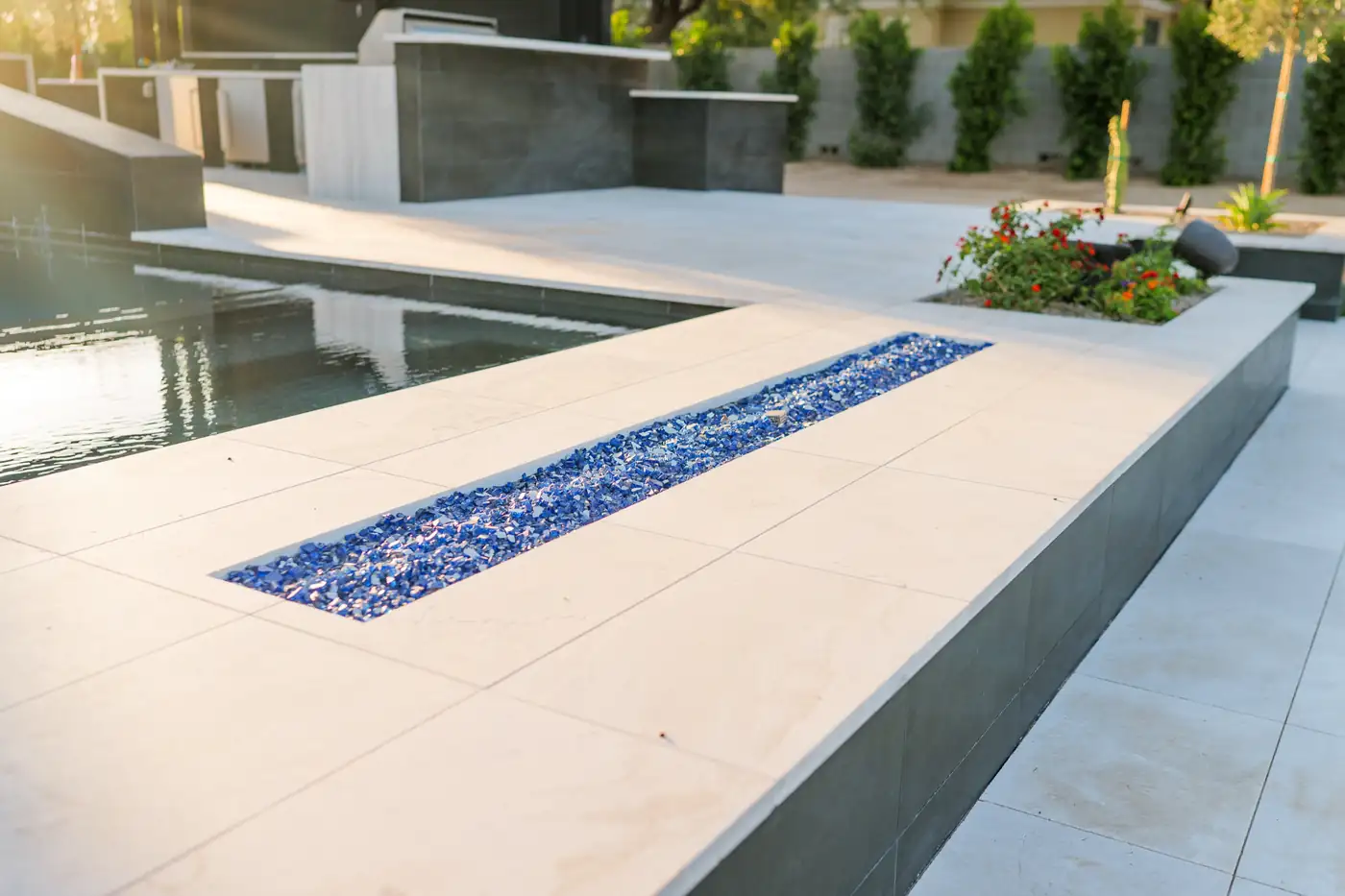
A prefab gas insert, meaning a factory bowl, burner and pan dropped into a built surround, can trim cost and time compared with a fully custom masonry build, and for many patios it is the right call. You still pay for the base, the surround and the gas line, so a prefab gas pit usually lands in the lower-to-middle part of the range rather than at the rock bottom. A fully custom built-in costs more because every course is laid and faced by hand to match your pavers and the lines of your yard, but it lets us size the pit to the space and tie it into seat walls or an outdoor kitchen. A bare off-the-shelf fire bowl set on an existing patio is cheaper still, but that is a portable product, not a built-in feature.
Do permits, HOAs or an existing pool change the cost?
Yes, and these are the desert-specific costs homeowners forget. Most Phoenix-area subdivisions sit under an HOA that requires design approval, and many Valley cities require a permit and inspection for the gas line. We handle both, but the submittals are part of the project timeline. Placement matters too: we plan around setbacks, overhead clearances and utility lines before anything is poured. If your fire feature goes near a pool, we build the hardscape, deck and any fire-and-water edge around your existing pool. Solterra does not build, install or remodel pools; we build the fire feature and surround, not the pool itself. That is why we price every fire pit and fireplace from an on-site walkthrough rather than a flat rate.